Showing posts with label El Salvador places. Show all posts

Monday, December 3, 2012

A day in Paradise

Yesterday I was invited to visit the island Tasajera, a place I've heard much about from Dr. Lauren Herbert and Cathy McKay.  About five years ago Lauren, a pediatrician in PeaceHealth's Sacred Heart Medical Center, Eugene, visited the island with Dr. Daniel Perez at the end of one of our medical missions, and she has since been working (along with her church and with the people of Tasajera) to set up a medical clinic and - more recently - to bring wi-fi and the possibility of teleconsulting to the island (through a grant written by Dr. Dany to Conexion, a Salvadoran NGO).  Cathy McKay, a nurse in Bellingham, got involved a couple of years ago, and has helped a group of women on the island to start a sewing cooperative where they make beautiful handbags - the project is named, in her honor, Las Bolsas de Cati. 

Both Lauren and Cathy are visiting Tasajera this week, and they invited me to enjoy Sunday there.  And enjoy it I did, every minute of that day of beauty, peace and serenity - a day in Paradise!

After two hours driving, I finally arrived at La Puntilla, at the very end of the road to the Costa del Sol, where Lauren and Rosa, a health promoter who has the healthiest and most infectious laugh I've ever heard, met me.  We travelled across the estuary by lancha (motor boat) to Tasajera, the name both of the island and the small town at the island's tip, and then boarded a pony cart for the trip to the island's other town, Colorada.
In Colorada, we visited the three-room clinic where Lauren works when she's offering consultas on th island.  A young man was waiting to see her with a long series of problems; he left with a number of medications and instructions:
Then we headed out to lunch, in one of two Colorada comedores, both built out over the estuary, and both run by brothers of Rosa.  Looking out over the river, we ate shrimp, tender shells and all, and the freshest fried fish I've ever tasted.

The comedor's bathroom is also built over the river, a beautiful creation to behold, but I was happy not to need to use it:


From the comedor, we got to see closeup one of the local fishing boats, a true dugout canoe, with two young boys happily fishing (in the background are the mangroves that protect this low-lying island with their barrier of interlaced roots):
Then we got into a lancha and headed out to the confluence, where the Rio Jultepeque joins the big river, Lempa, and they both flow into the ocean.  We swam in the calm salty water of the confluence for a beautiful, dreamlike hour - we had the beaches all to ourselves - then headed back to La Puntilla, passing along the way an enormous number of pelicans, roosting in mangrove trees and in snags on the river:


An amazing, beautiful day.  I came to understand completely why the young folk on the island, when asked if they're interested in going to the capital to study or work say "no."  Who would trade this peaceful and beautiful island, this peaceful and beautiful way of life for the noise and danger of the city?

It wasn't until today that I realized that this place of great natural and human peace and beauty must be one of the thousands of places on our planet endangered by climate change and the rise of ocean level.  This gives me abundant reason to work harder to alter my own ways and to advocate for earth justice.

Gracias, Lauren and Cathy, por un dia en el paraiso and for all you're doing for the people of Tasajera!


Saturday, November 24, 2012

Down by the seashore

My cousin Margaret Rooker has been visiting this week, and we've had a great time talking and remembering and playing and enjoying El Salvador.  We managed a complete Thanksgiving feast for seven with turkey, an outrageously good cranberry sauce, and appropriate accompaniments - best of all, perhaps, the inside-out apple pie ala mode with a crust of oatmeal, pecans, and the local artesanal cane sugar, dulce de panela.

And then we stuffed all the leftovers in the refrigerator and took off for the beach where we walked and talked and watched the surfers and splashed and dabbled and ate good food....Here's Margaret at Roca Sunzal, basking in the summer sun on the day after Thanksgiving.  Tomorrow we're going to take the turkey out of the refrigerator and feast on with my friends Rosy Melara and Nena Angel.  It's always time for a good party!

Monday, November 19, 2012

Exploring the ruins

A delightful excursion yesterday - the Burgos family invited me to go with them to Tazumal, the largest and grandest of El Salvador's Mayan ruins.  We were joined by Jennifer, a norteamericana newly in El Salvador who teaches English subjects to Camila Burgos and her classmates in a bilingual school. 

Seeing Tazumal and listening to our very knowledgeable guide (above), I was reminded how recent we people of European stock and tradition are in this land's long history.  Tazumal and its surroundings have been continuously inhabited since about (hope I'm remembering this correctly) 1000 B.C.E., and the area is full of unexcavated remains from those earlier days.  Here's the main temple:

That earlier world still survives in many ways - in customs, in agricultural practices, in foods, in ceremonies, in family traditions - though in El Salvador it's been pretty thoroughly "translated" and blended into Latin-American life.  And, of course, that world survives in the people, especially in the campo: even though very few any longer speak Nahuat or Lenca, they carry the history in blood and bone. 

We finished our visit as those ancestors might have, walking across the street for lunch at a restaurant serving yucca, the premier dish of Chalchuapa, where Tazumal is located.   Yucca salchichada con chicharón and yucca frita con curtido - boiled yucca (tastes like the best potato you can imagine, only better) with pork rinds, and fried yucca with vinegar slaw - delicious.  Gracias a los Burgos for a wonderful day.

Friday, May 11, 2012

Looking ahead

A couple of weeks ago, after we put all our surgery mission folk on the plane home, Kathy Garcia and I hopped in the new CIS pickup with Leslie Schuld to take a long drive to Estanzuelas, the town Leslie proposes for our 2013 mission.  And since our first question is always "and just where can we put the 28 people on our team?" we stopped first in the beautiful hill town of Alegría (the name means "happiness") to visit the Casa de Retiros (retreat house) run by the Pauline Missionaries.  It's a simple, spacious and beautiful retreat house that borders a finca, a coffee plantation, that's also owned by the padres. The town perches among steep hills, was the home of El Salvador's most famous philosopher, Alberto Masferrer, and has many beautiful moments like this shrine to Our Lady of Guadalupe.  


We were sold even before we got to Estanzuelas, where we were generously welcomed by Marvin Hernandez, who guides the CIS scholarship program there, and Dra. Jakellyne Jimenez, Director of the Estanzuelas Unidad de Salud (the government health clinic).  Dra. Jimenez invited us to use a portion of the clinic for our medical mission and we accepted most happily. Below, left to right, are Leslie, Dra. Jimenez, Marvin and Kathy. 

Sunday, February 5, 2012

In San José Villanueva

Our mission team arrived right on schedule Saturday night, at 9 pm, and our only problem in Customs was that one of our tubs had gone missing (it arrived today after spending the night in Houston).  We were on our way to the beautiful Salesian retreat house, Ayagualo, by 11 pm, and arrived at about midnight, still with a little energy available for getting to know each other and talking about the week ahead.
Today we've been getting to know Villanueva and the church/school at the center of the town where we'll be working all week.  Many of us went to Mass and discovered that our host, Padre Mario Adin, is a wonderful homilist and a man deeply committed to the life of his community.  All day there were masses, meetings, study groups, catechism sessions, literacy training taking place in all the corners of the complex.
Our major tasks were setting up the various clinics and the pharmacy, counting out vitamins and bagging them (everyone who comes to our clinics gets a month's supply of vitamins), and having some training sessions with our team and with the local volunteers.
We know from plentiful experience that tomorrow will be a little crazy as everyone tries to figure out her or his job and as the patients flock in to see us.  We also know we're blessed to be here, that we'll be well fed, both at the retreat house (we had pupusas tonight!) and at the parish, where we had a grand lunch today, and that we'll get to return to the beautiful grounds and comfortable rooms (and hot showers) at Ayagualo each night to restock for the work of tomorrow. 
And now it's time for me to catch up on sleep after two very short nights!

Sunday, November 20, 2011

Gracias, Hermana Paquita


It's been a very long week - I've been restocking groceries, getting the car serviced, working on arrangements for our February health mission, and visiting people who get scholarships or family support from PeaceHealth staff. Every errand means a couple of hours of driving time, so the days have been long.

Today the driving time was even longer, but for a couple of very good reasons. In the morning I went to San José Villanueva - our February mission site - with Clelia Estrada from the Caritas office in the Archdiocese. We had a good meeting with Padre Mario Adin, parish staff and volunteers, then stood in the back of the church, standing room only, while lots of beautiful girls and boys made their first communion.

Then I went on to the Bajo Lempa area where a very special Despedida (farewell) was in progress. Providence Sister Fran Stacey, known to her community in the Bajo Lempa as Hermana Paquita, was getting a full-hearted Salvadoran thank you and farewell. Fran retired to Seattle about six months ago, but has returned for a few weeks to visit her many friends, and they - being Salvadoran - decided to put on a full-scale despedida. There were speeches and proclamations and thanks for the remarkable work Fran did during her 16 years in El Salvador, which included founding the Fundación Tierra y Esperanza para el Campesino (Earth and Hope for the Farmer Foundation), working to provide scholarships for local students, and helping raise funds for health emergencies. It seems like she's been a key part of much that's happened in the coastal zone for all those years, and now it was time to say "thank you!"

I had to leave while the thanks were still being spoken, so just got a chance to talk briefly with Fran and tell her thanks also from the Sisters of St. Joseph of Peace. I didn't manage to get a photo of her, but here's one of the dancers getting ready to delight everybody.

Just for the enlightenment of you norteamericanos who may be reading this: the despedida began at 1 PM (more or less, I think it was really just getting under way when I arrived at 2) and was scheduled to go on until 4 PM, with pretty much all that time filled by speeches and presentations. Now that's a serious thank you! Gracias, Hermana Paquita!

Monday, October 24, 2011

A letter from Comasagua

I got an e-mail today from Alex Hernandez, a friend and a great volunteer in our 2009 medical mission in Comasagua. Alex writes (and I translate, loosely) -

I want to tell you about the week of rains and the chaos in Comasagua because of the tropical storm. Twelve shelters have been opened for people in our municipality [municipalities in El Salvador include all the smaller communities around a central town] and I have been in one of them, caring for 50 people day and night, watching over the women, children and old people sleeping and making sure they get their three meals in the day. This has been a beautiful experience for me because you know that one becomes fond of the people and I feel a love for them as if they were my family. I don't know if you understand me, Sister Susan, it's something that it's not possible to explain.

I'm also working in the church with our priest, helping to organize the assistance that arrives for the people in shelters, and then sharing it out with them. I can tell you it was good to be helping my neighbors because they needed the help, but at the same time sad to see so much suffering, to see the faces of each of them, far from their lands, their houses lost, their crops ruined, exhausted after days of suffering. I'm glad, though, for all the work we have been able to do for them. Comasagua begins a new life.


I do understand, Alex, and I know that the help you're giving your neighbors, your new family, returns as a blessing to you. I thank God that you and so many others are working all over El Salvador to help the people first to survive, and now to begin to return to their homes and start the long hard work of digging out and starting again.

Thursday, October 6, 2011

Sitting in Starbucks and remembering Steve Jobs


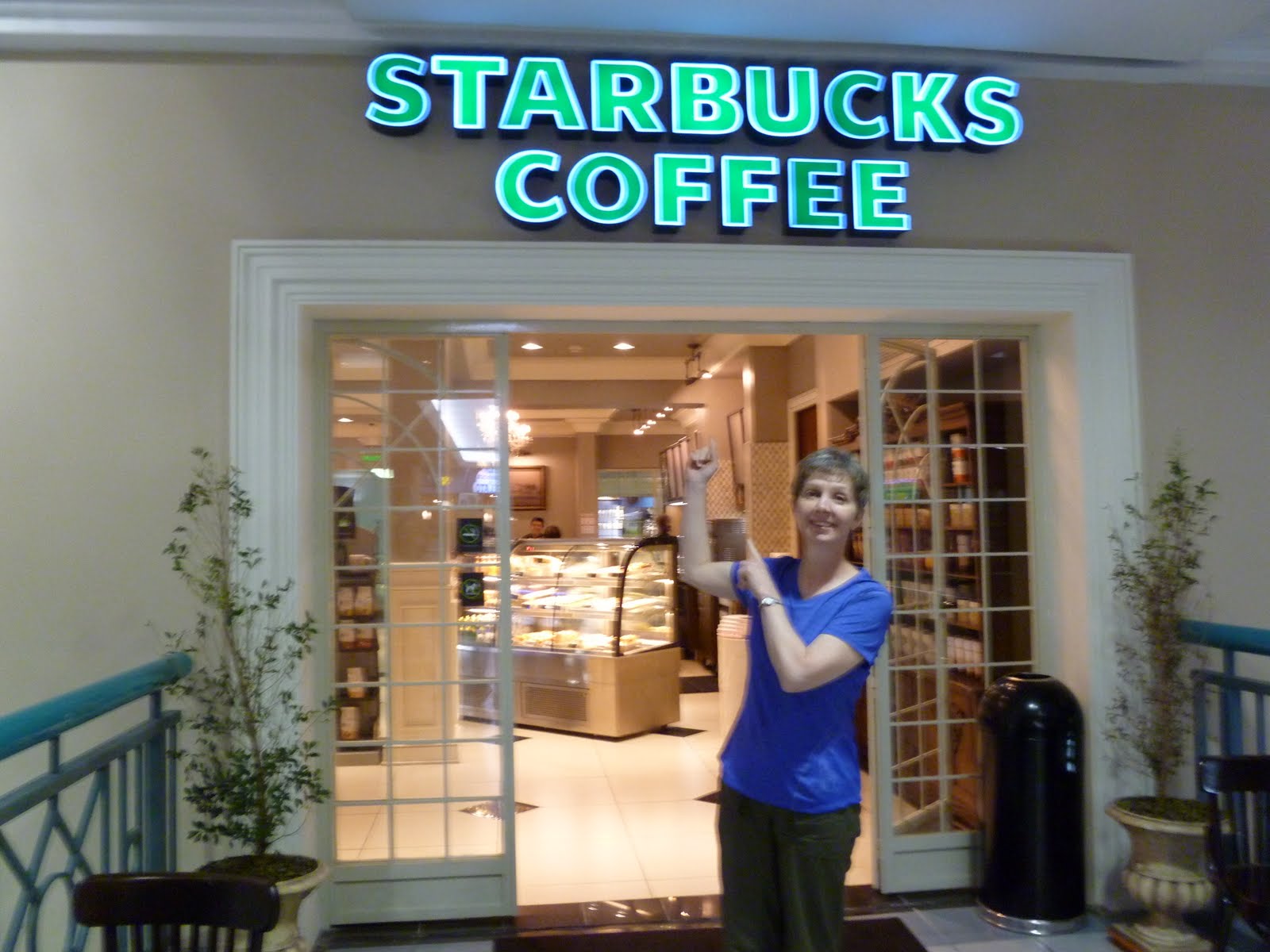
I'm sitting in Starbucks in Santa Elena, and I've got mixed feelings about this. Starbucks is such a familiar sight for a Seattleite, and everything here looks just right, the cups, the Starbucks mermaid, the comfy couches, the internet access and (sigh) the prices. So I'm pleased to find this comforting combination. (Here's a photo of Kathy Garcia in front of the Starbucks in the Galeria - another northwestern tickled to find this familiar place.) But - on the other hand - I do wonder if Starbucks is chasing out some of the local coffee places - Viva Espresso, the Coffee Cup, Ben's - where you can get great espresso and buy a variety of Salvadoran coffees, among the best in the world.

I remember what a great hangout Starbucks was for the women who lived in Rose of Lima House, transitional living in Seattle, when I worked there. They'd go around the block to 1st, buy a cup of the coffee of the day, and sit and talk for two hours. It was the closest thing they could afford to being in a nice restaurant, and I always loved Starbucks for being a place where you could just be, even if you were homeless. It doesn't feel at all like that here, of course - clearly the folk who go to any coffee house in El Salvador are doing pretty well. They tend to be the folk who dress up in suits, if just so everyone will know that they work in air-conditioned splendor.

So my feelings on Starbucks here are mixed. But it's a good place to remember and give thanks for Steve Jobs, who's put such liveliness and fun into people's hands. I bought the first Macintosh in the spring after it was introduced; it cost an outrageous amount, you had to swap disks to go from the operating system to the writing and drawing programs, and I loved it. I remember those great fonts - imagine, being able to have fonts on a computer - New York, Chicago and quirky San Francisco - it was such fun for someone who'd been using a very dull word processor. And that, of course, was only the begionning, and now I sit here typing on my iPad on a the wireless keyboard, still having lots and lots of fun (and getting a bit of work done too) thanks to Steve's singular genius and vision. Gracias.

Tuesday, May 24, 2011

Sweet retreat


Lately our mission groups have stayed in retreat houses during the week, a choice that gives us an unbeatable combination of good food, quiet (except for the critters, see below), beautiful surroundings, and simple lodgings. Our eye surgery group, like the February General Medical Mission volunteers, stayed at the Casa de Retiro Santisima Trinidad - the Holy Trinity Retreat House - in Candelaria, about 20 minutes away from our work place, the Hospital Nacional de Cojutepeque.

Santisima Trinidad is run by the Carmelite Sisters of Saint Teresa, the same community that runs the Hospital Divina Providencia, the cancer hospice in San Salvador where Monseñor Romero lived and died. They're a lively and friendly group of Sisters and we've enjoyed getting to know Sisters Mari, Paty, Francesca and Amparo.

Santisima Trinidad is set on the hills above Lake Ilopango, and the chapel and dining room look out on the lake. The gardens are full of flowers, especially at this season-changing time of the year. And the beautiful fountain - it's the trinitarian fountain of St. John of the Cross - is home to toads with some of the deepest, loudest, and most demanding calls I've ever heard. There was also a nightly dog chorus...but after the first night, we mostly slept through it all.

Indeed, a sweet retreat, and a perfect home for our mission team.

Sunday, April 3, 2011

A delegation

Today I had the joy of meeting with a group of young people from St. Patrick Parish, Seattle - my church when I'm in the Northwest - who will be the delegation to St. Patrick's sister community, Nueva Trinidad in Chalatenango, this June. They range in age, I'd guess, from 13 to 18 - a few adults will be coming as well - and they had great questions about their journey, ranging from the prosaic worries about getting sick to those questions we all harbor - will people like me even if I can't speak Spanish? What if I do something offensive without meaning to?

I hope I was able to reassure them that the kids in Nueva Trinidad will be nervously asking themselves the same questions - will these cool kids from El Norte like me even if I forget all my English? I know that they will like each other and they will learn so much more than they expect.

I'm hoping to get the group to Suchitoto for a day, and maybe for them to have time to explore Guazapa Mountain on horseback. Mostly I know that whatever they see and do, their curiosity, intelligence, and commitment to justice will make this trip a memorable time in their lives.

Monday, February 14, 2011

God be with you


Do you know that "goodbye" is a shortening of "God be with you"? This morning Kathy and I hugged our wonderful medical team goodbye and sent them into the airport, knowing that God was with them. By now, they're home and telling their stories to family and friends, as they remember the people and the days of our mission.

We saw 1305 of San Rafael Cedros' citizens during our five days with a total of 2185 clinic visits. A number of our patients had serious illnesses that needed referrals to the local clinic or hospital for follow-up care. I'll be keeping connected to some of those follow-ups, and to our 50 patients for the cataract surgery week in May.

We will all remember different things from the week, different faces - surely this lovely woman in pink will be well remembered by Kathy and Sister Amalia - but we know we've been blessed by the people of San Rafael. And we've been deeply blessed by getting to know each other. By the end of this intense week, the 28 of us had worked together, laughed together, shared stories, wept a little, danced, played cards, enjoyed Salvadoran food, loved the sunshine in February. It was as smooth a week as Kathy and I have experienced, and for this we're grateful both to our great team and to the super-organized local volunteers of San Rafael Cedros. May God be with all those returning home with memories of a week well spent.

Tuesday, January 18, 2011

Getting ready

I'm all over the scorpion bite, I'm happy to say, but it was an unforgettable experience. Now taking the flashlight with me AND putting my shoes on when I go to the bathroom in the night. Never mind, the next thing will be something else I don't expect.

We are a little less than three weeks from the arrival of our General Medical Mission, and there's a lot of organizing and preparing on my plate before then. Today I drove over to San Rafael Cedros to talk with Iris Alas, our wonderful local organizer, about food for our hungry team. We met with Doñas Angela, Maria Elena and Mirtala, and I can tell that we will, once again, feast like kings and queens. They've cooked for delegations before and they know what to do to keep our stomachs calm and our hearts happy.

San Rafael Cedros is one of the prettiest Salvadoran towns I've seen - sparklingly clean, with freshly and brightly painted stores. I should have photos to post, but I keep forgetting - eventually some will show up. It's a small town with a lot of surrounding country communities, and it's a well-organized town that has had some great successes recently in combating crime and delinquency. It's going to be a joy to get to know San Rafael Cedros better.

Thursday, January 13, 2011

Working together


It's been great this week to have Kathy Garcia here in Suchitoto and to spend a week working together on our coming missions. Usually Kathy is about 5,000 miles (an extremely rough estimate) north in the much colder regions of Eugene, Oregon, while I'm down here in the sunshine. We connect by e-mail and cell phone all the time, but it's not the same as being in the same place.

Most of our week together has been focused on our coming mission in San Rafael Cedros, a beautiful small town about 50 minutes to the southeast of Suchitoto. Yesterday we visited the beautiful La Santisima Trinidad retreat house in Candelaria, where our groups will stay, and the national hospital in the district capital, Cojutepeque, where our eye surgery group will work in May. Today we checked in with Iris Alas, our local coordinator for San Rafael Cedros, looked again at the municipal kindergarten we'll be using for the clinics, and tried to figure out how to fit all the docs and patients and helpers and translators and chairs and tables and exam tables and eye-screening equipment into a pretty small space. It's going to work, mostly because Kathy is so great at organizing space and flow, Iris is clearly an expert at organizing people, and I've gotten some good experience in organizing the permits. We hope to be a very well-organized group!

Monday, December 6, 2010

San Rafael Cedros


One of the best days in my busy week last week was Thursday, when I drove to San Rafael Cedros - about 45 minutes from Suchitoto - where our medical clinics will be held in February. Iris Alas, the community organizer for the CIS (Centro de Intercambio y Solidaridad) in San Rafael Cedros brought together a group of volunteers from different sectors of the community, and we talked about the clinics - who to invite, which sector will come on each day, and how the local volunteers will be involved. The volunteers - mostly women - asked great questions and are looking forward to the clinic week.

San Rafael Cedros is an attractive town just off a main highway, the center for a rural community. At the moment it lacks a church, because the former church was damaged in the 2001 earthquakes, and the remaining facade was recently demolished. I met the parish priest who said he was trying to raise half a million dollars for a new church - that's an enormous sum in El Salvador. We also met with Doctora Valdez de Perdomo at the local health clinic - they are important partners for us, as we always ask for the loan of a doctor and nurse for the week, the doctor to write referrals for patients who need more specialized care and the nurse to handle the paperwork for pap smears in our gynecology clinic. She was happy to offer their help, to loan us a gynecological exam table, and to write a letter of support. We'll get another letter of support from the Alcalde, Dr. Joaquin Molina. He's a general surgeon when not serving as Mayor, very pleased that we're coming to his town. The letters of support go to the Medical Board here, with our packet of information asking for approval of the clinics, and to donors of medications in the United States.

We finished off our day by having lunch at the town's famous restaurant, Doña Virginia's: it's said to be the best fish restaurant in El Salvador, and judging from my delicious lonja empanizada that may well be true. Working in San Rafael Cedros is going to be a joy!

Sunday, December 5, 2010

A long busy week


It's been a long and busy week, and I haven't touched the blog. I've put a lot of miles on the car in visits to Soyapango, Apopa, San Salvador, El Paraiso, San Juan Opico, and San Rafael Cedros. I joined Peggy O'Neill and Margaret Jane on a beautiful day of memory and renewal in Nueva Esperanza, Bajo Lempa, to honor of Ita Ford, Maura Clarke, Dorothy Kazel and Jean Donovan, the North American religious women who gave their lives as martyrs of peace thirty years ago. It's too much to put into one blog post, so I hope to publish several short posts today. Here, to begin with, and from the beginning of the week, is Alejandro, my 14-month old godson, up and walking, with his new short boy haircut. Pretty cute, eh? Hard to believe, but his mother has somehow trained him not to head for the china ornaments you see behind him. Ani Paula and her Salvadoran compañer@s could give parenting lessons to a lot of anxious gringas!

Monday, October 25, 2010

A visit to Panchimalco


Three years ago, when our PazSalud medical mission was held in Panchimalco, Walther, one of the main volunteers from Panchimalco, captured the hearts of many on our team. A group of them decided to help him realize what seemed like an impossible dream for a young man from an indigenous family - to become an engineer.

Two and a half years later, Walther is studying hard and doing well at a University in San Salvador with regular support from his friends in the United States. On Sunday, I drove to Panchimalco to bring him a recycled laptop, replacing one that was stolen. The computer, an old PeaceHealth laptop that was ready to be discarded, was refitted with an Ubuntu operating system and open-source software, thanks to Jeff Bruer in PeaceHealth's System Office.

I met Walther and his girlfriend Sarai in the center of Panchimalco, and we drove a few more kilometers to his home in canton La Cruz - a good workout for the X-Trail, which did very well on the dirt roads and in 4-wheel drive. I meet with Walther often, to get him his beca (scholarship) funds, but I'd never visited his home before. It was a joy to meet his family and get them all to pose for a photo. Visiting helped me to realize the distances, physical and psychic, that Walther has to travel on his quest to become a Licenciado in engineering. It takes a lot of strength and character to manage a leap like this without losing touch with your family and your family's values - and Walther has what it takes.

Thursday, July 22, 2010

Maria, Madre de los Pobres

On the feast day of Mary Magdalene, I visited a San Salvador parish, Maria, Madre de los Pobres, (Mary, Mother of the Poor) with Sister Patti, a Sister of Christian Community from Baltimore who has been coming there every summer for 21 years to work/play with the children (she teaches them to draw clowns) and to visit with families in crisis or in need.

It's a good thing I went with Patti, because I could never have found the church - located at the center of the La Chacra community - on my own. We took three buses and then went in by way of the railroad tracks, which like all railroad tracks here have sprouted a community of rundown houses - built of plastic and lamina, tin sheeting - on both sides of the abandoned rails. Patti walked us down the tracks and then down a narrow lane between houses and suddenly we came to the open gateway to Madre de los Pobres.

The church was the last thing to be built, Patti tells me, because Padre Daniel, the Spanish priest whose vision and energy created Madre de Los Pobres, wanted to be sure the basic needs of the people were served first. What he and the community created, with the help of Spain, Germany and U.S. parishes, is amazing: there's a big day-care center and an elementary school, a library with books and computers, a ludoteca (toy library - a great playroom for the kids) a medical clinic, dental clinic, and eye clinic where glasses are made, a natural medicine store, a social worker, a senior center, a scholarship program - and that's only the parts I can remember.

With all this support, the problems of poverty continue to erode life in the community. Gangs are very present; violent deaths are frequent; families are broken. But because of the church and the hope and presence it offers, there are other possibilities for the families of La Chacra. I met -among many wonderful people - Maria, who's studying to be a teacher and speaks excellent English, and Lucas who's going to be a systems engineer. They are the hope that Maria, Madre de los Pobres, makes possible.

Saturday, June 26, 2010

In the Bajo Lempa


Armando Ramirez is a long-time friend of Sister Eleanor Gilmore - he spent a lot of time at El Despertar, a Jesuit Refugee Service center in the late 1980s for people coming in from the country for medical care. Eleanor was in charge of El Despertar, and Armando was one of her favorite patients.

Armando's war wounds still give him trouble, but he's built a good life for himself down in the Bajo Lempa area (the lower part of the Lempa River, just before it reaches the sea) with his wife Blanca Luz and their daughter Erica. I've met Armando many times, but I'd never seen his home or met his family - nor had I been to the Bajo Lempa. So when I had the chance to help him out by giving him a lift with a new desk chair he'd found, I was delighted.

When we got down to the Bajo Lempa area we found it, as I'd expected, hot and humid and still flooded from the downpours of Tropical Storm Agatha. The seacoast and the coastal plain are the hottest areas of the country - and also among the most beautiful. We got there via a road that's in the process of being improved for tourism - and it really needed the improvements, as navigating the road required swaying the car from side to side to avoid the baches, potholes.

Armando and Blanca Luz proudly showed me around the beautiful home they had built for themselves, and then took me out back, where the young trees of their orchard - coconut, mango, lime, orange, papaya, nance, to name just a few - are beginning to bear fruit. And I had my first chance to drink coconut water directly from a coconut (Armando's cutting down some cocos in the photo above). There's got to be an art to that: I was pretty messy, but I loved it all the same. Armando also sets up audio for festivals and dances, and fixes bum electronics - he's a smart and enterprising man - but their orchard and chickens and his nearby milpa mean that he's got that piece of earth that can sustain the family through the ups and downs of his electronic work.

Salvadoran farm/homesteads like Armando's make me happy because he has something we've almost lost (but perhaps are beginning to rediscover) in the United States - the family-sized self-sufficient farm. Food from home.

Thursday, May 27, 2010

Rain in abundance

Yesterday I got up well before dawn to take Kathy Garcia to the airport, and drove through a lot of fog and rain - no fun in the dark - to get there. All week, the sky overhead has been gray, and we've had heavy rains every day. The country is on a "green alert" because of the rains, rivers are overrunning their banks, and huge waves are reported on the coast.

Heavy rains are normal enough here, at this time of year. But five days of gray skies with no relief in sight? That never happens here. It almost feels like Seattle (but lots warmer). I have two weeks worth of clothes waiting to be washed, but until the sun comes out, it will be pretty hard to dry them.

The people who suffer in this weather - or any weather - are the poor, people whose houses have roofs of plastic or cardboard, people who can't afford to fix the roofs, people who live under earth banks that may collapse in the rains. The United Nations Development Program in El Salvador recently issued a two-volume study of areas of urban poverty and social exclusion in the country ("urban" is a bit misleading: the study mapped all areas with more than 50 dwellings, so only the truly rural areas are excluded). It's downloadable and fascinating for those who know a bit of El Salvador and like maps; it should be a great guide for the government's plans to build additional low-cost housing. Sadly the amount of poor housing is far greater than the government's resources for building new housing. Most of the poor, it seems, will continue to suffer in the heavy rains.

Sunday, April 18, 2010

A place overlooking the valley

I drove Leslie and Christy and Antonia from CIS up to Comasagua today so we could all be part of Mercedes' burial. We got to the town near the end of Mass, con cuerpo presente, with the body present and flowers upon flowers upon flowers. Then, in a group of about 300 people (I'm guessing) we walked slowly and a long way, perhaps a mile, to the community cemetery. There on the edge, in a beautiful spot overlooking the valley and the next ridge, the grave had been dug. No astroturf carpet here. People who loved Mercedes talked about the gift she had been to her family and friends and community, and people who loved her lowered her coffin into the ground, and people who loved her shoveled the dirt on top, and we all cried. Then women brought the flowers and stuck them into the earth on top of her grave, so many that they could hardly fit, but they did and made a glorious garden and the whole hillside was full of her friends, another kind of garden.

Mercedes and her husband Salvador have three children - Andrea, who looks just like her mother, and Ernesto, and the youngest, 10 years old, Ileana. I gave Salvador a copy of the photo of Mercedes from the Romero 30th anniversary celebration (it's in my last post) and he said - that's just what she's looking like in heaven.

It's impossible to escape the thought that in the United States Mercedes would probably not have died, would probably have gotten much quicker attention to her heart condition, would probably not have suffered a stroke. She tried to get seen in the local health clinic, but without success, and the hospital she went to, while the best in the country, doesn't have enough diagnostic equipment to test all patients quickly. She shouldn't have died at 46, but she did. People die every day here from ignored diseases or lack of medication or inadequate treatment. It's a justice issue Mercedes cared about.

I've gone in one short week from a baptism to a burial, from a joyful beginning to a sorrowful ending. But there is also joy, though it's harder to unwrap, in celebrating a life lived with courage, determination, joy and justice - the life and legacy of Mercedes Arias of Comasagua.